Har HaBayit, Emek Tzuriim, Bedouin Tents
Rabbi Harry Pell
Most of our group is getting to sleep early at the Bedouin Tent in Kfar HaNokdim, in preparation for an early morning climb up the Roman Ramp to the top of Masada – just in time to watch the sun rise over the Dead Sea.
Earlier today, many of us went
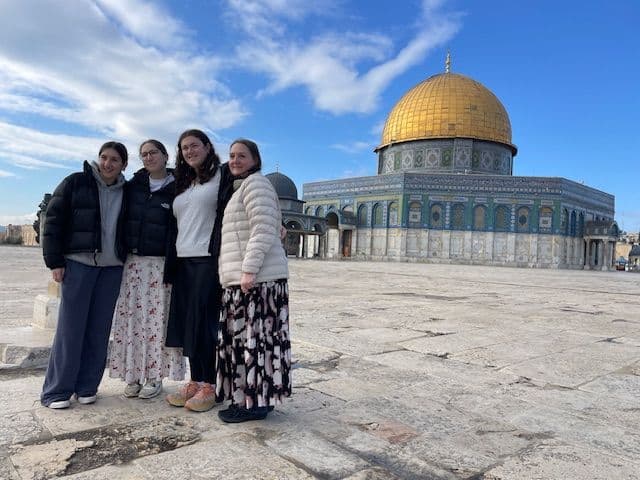
up to Har HaBayit – the Temple Mount, known to Muslims as Haram Al-Sharif – the Noble Sanctuary, for a tour of connection and appreciation. We had Har HaBayit almost entirely to ourselves this morning and we were able to understand the evolution of the mountain, also known as Mount Moriah, over the eons. It was awe inspiring to stand so close to where the Temple had stood before it was destroyed in 70 CE, and to know that even today, the stone which Jews identify as the Foundation Stone of the world is still there, covered by the Dome of the Rock.
We were also able to use our visit to hear Muslim narratives about the Mount based on the Quran, and to appreciate its sensitivity in the years since 1967 as well as today. Har HaBayit may well be the most contested piece of real estate in the world (which is ironic given how quiet and peaceful it is most of the time, including during our visit), and our students will doubtless be asked to explain its significance to us as Jews as well as to Muslims when they are on campus in the years ahead. How fortunate that we could visit, to take it all in and connect with this beautiful and meaningful location, in an appropriate, respectful manner.
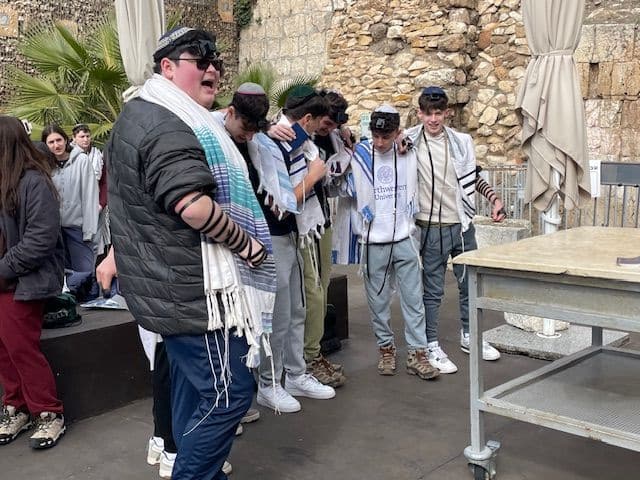
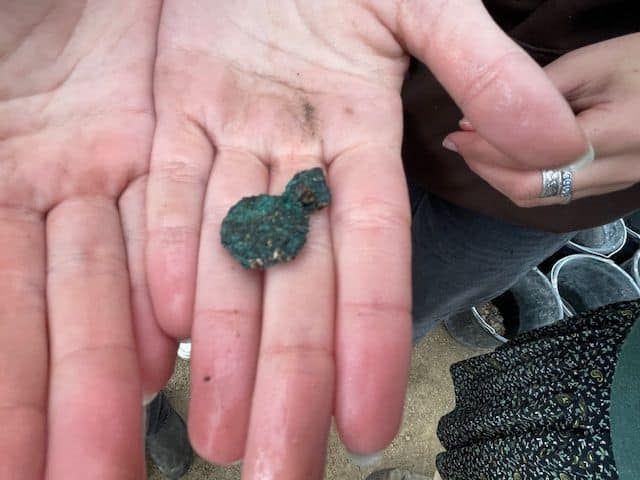
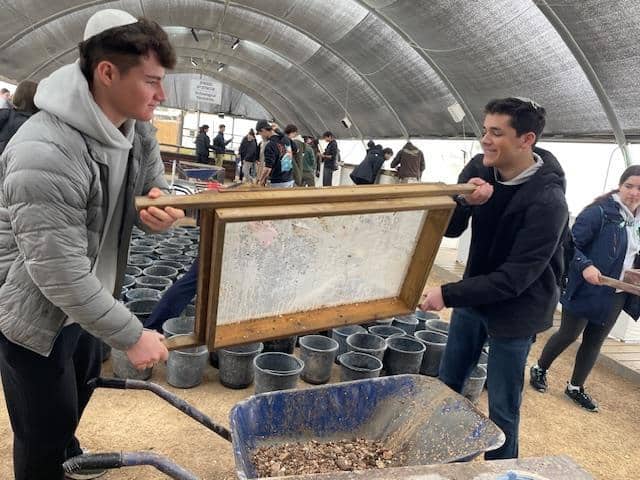
After a little over an hour we descended from Har HaBayit to daven Shacharit at the Robinson’s Arch section of the Kotel, followed by a quick breakfast from Aroma Cafe before leaving the Old City. We then travelled a short distance to Emek Tzurim, where dirt from excavations on Har HaBayit and in Ir David is sifted by volunteers, yielding archaeological finds from every era of Jerusalem’s history going back over 3000 years. In addition to plenty of pottery shards, bones, mosaic tiles, and fresco fragments, groups that get lucky might find an ancient coin, or if they are really lucky, two ancient coins. Our group found eight ancient coins during their sifting, including coins dating back to the fourth year of the revolt against Rome in 70 CE, and one from even earlier that dates to the time just after the Maccabees.
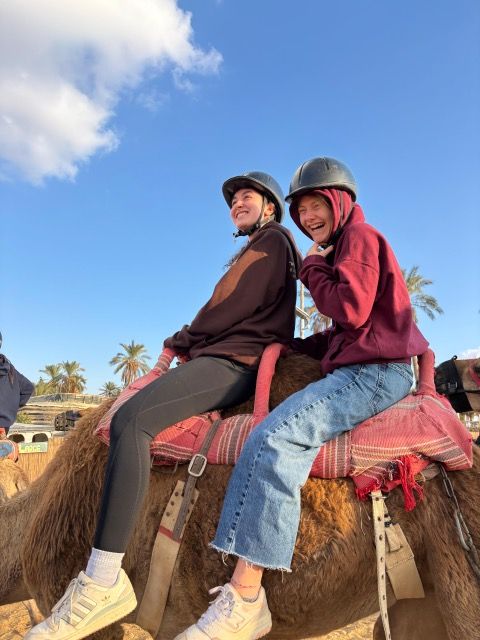
After sifting it was time for lunch and the drive down to the Bedouin Tent and camel riding, before a much more calm evening in the desert to balance our busy morning. And tomorrow, up before sunrise!