Shabbat in Krakow, Sunday in Oswiecim (Auschwitz)
Rabbi Harry Pell
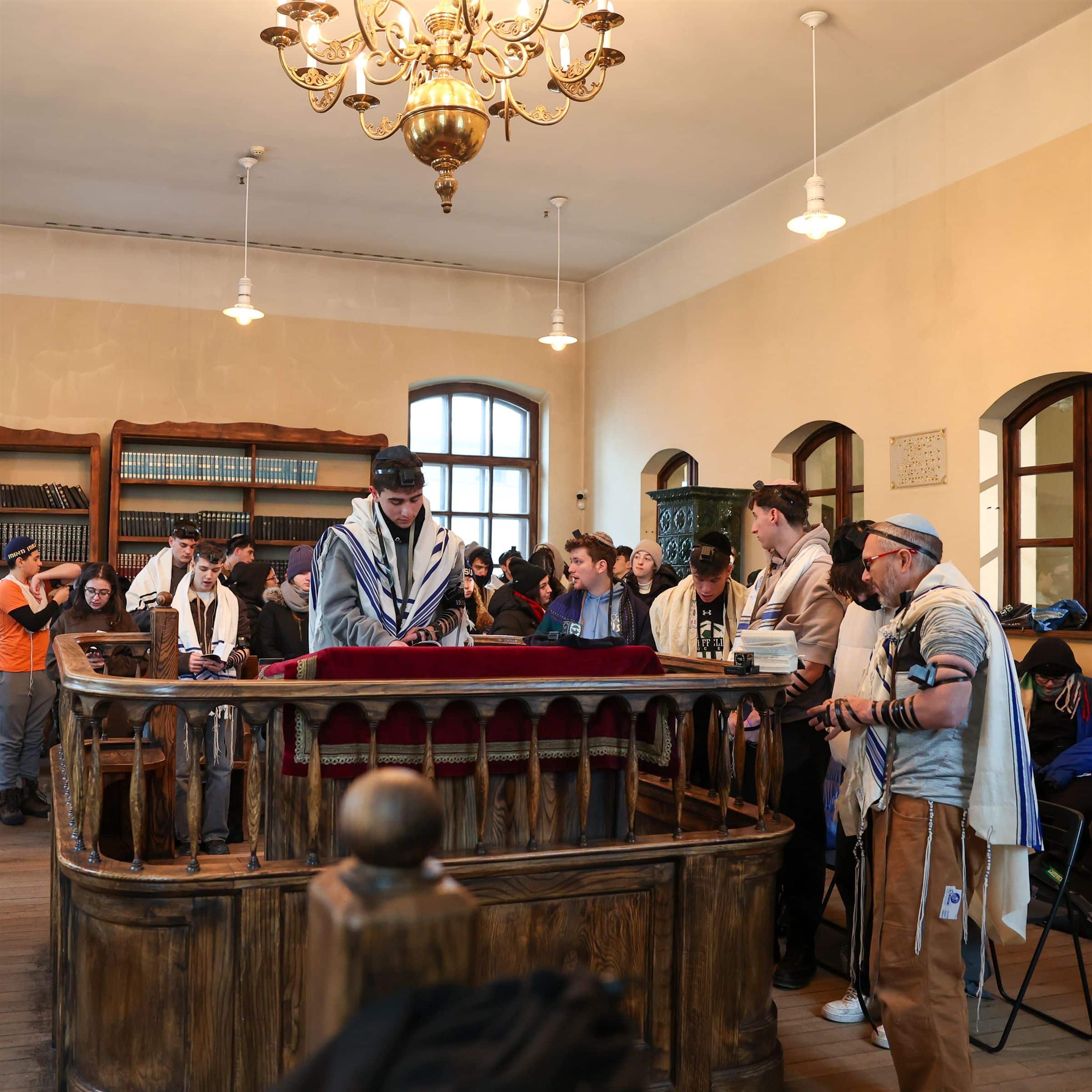
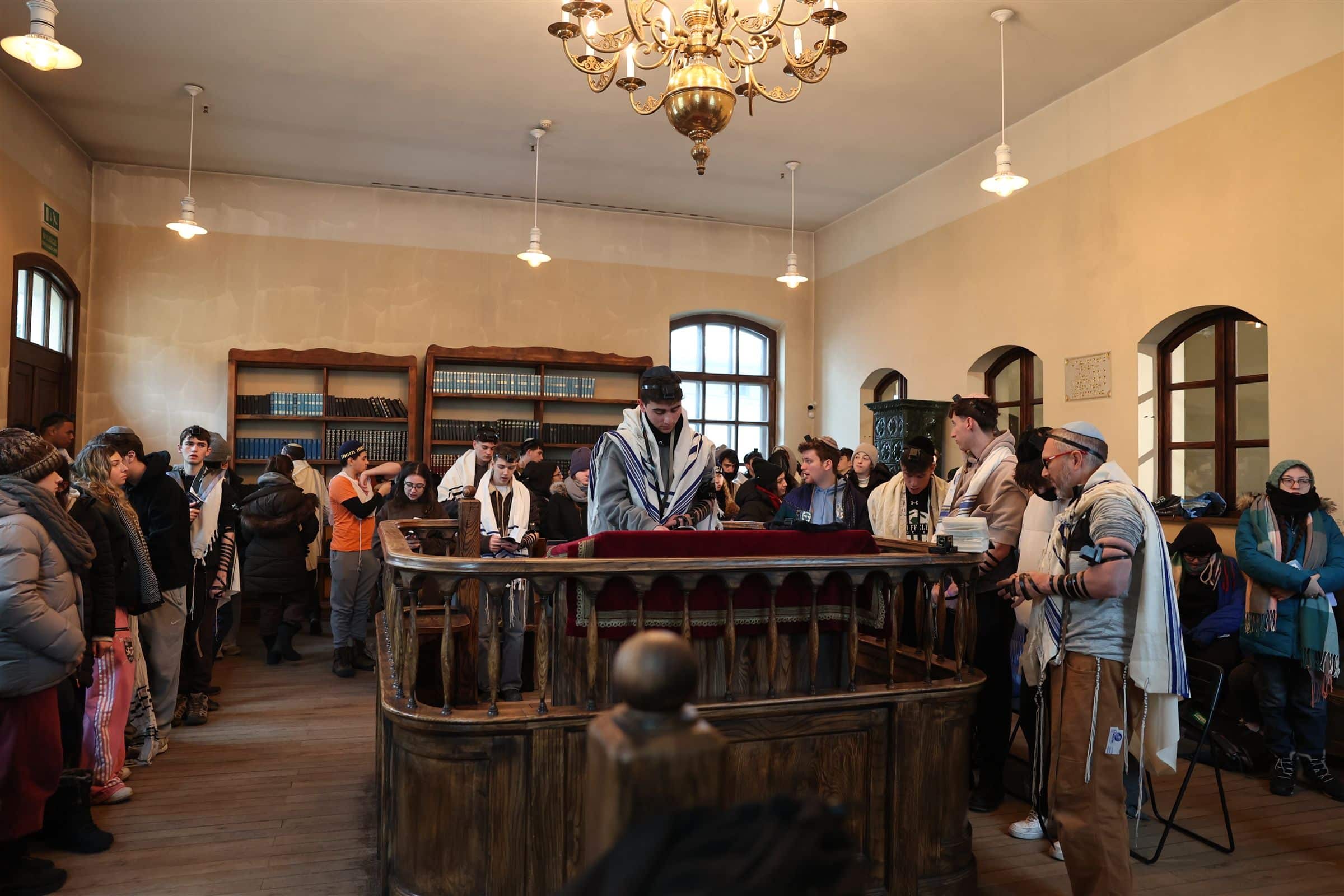
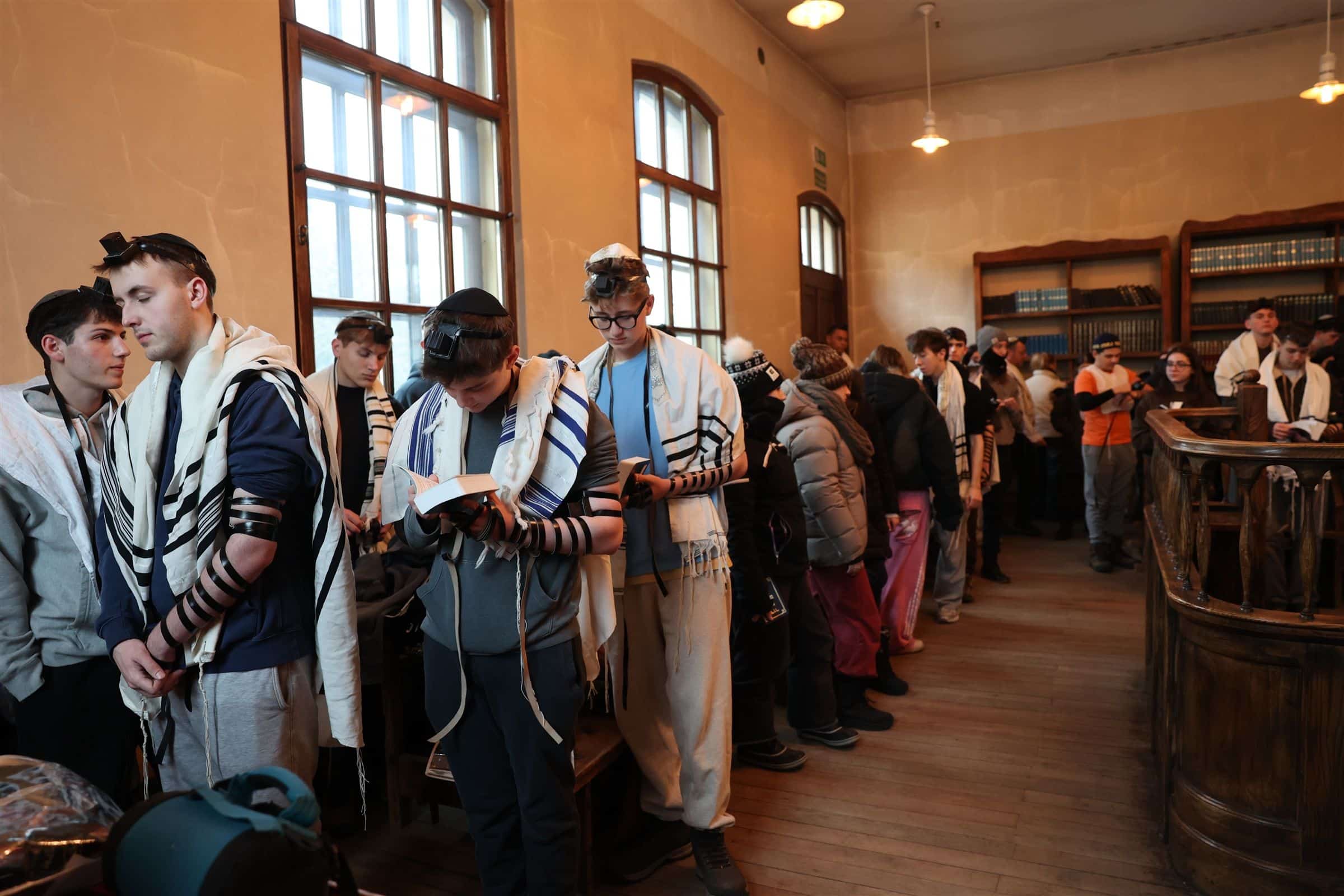
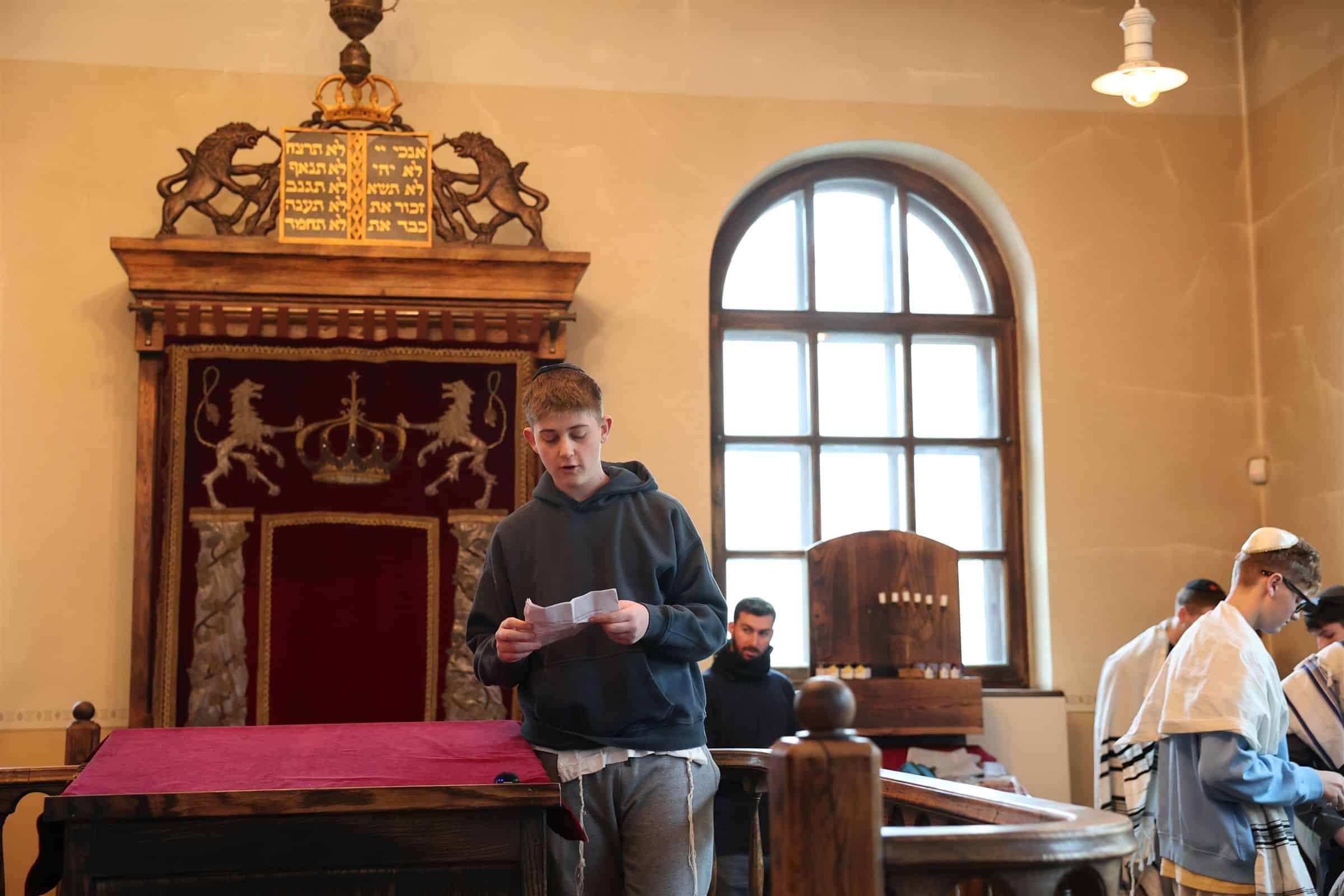
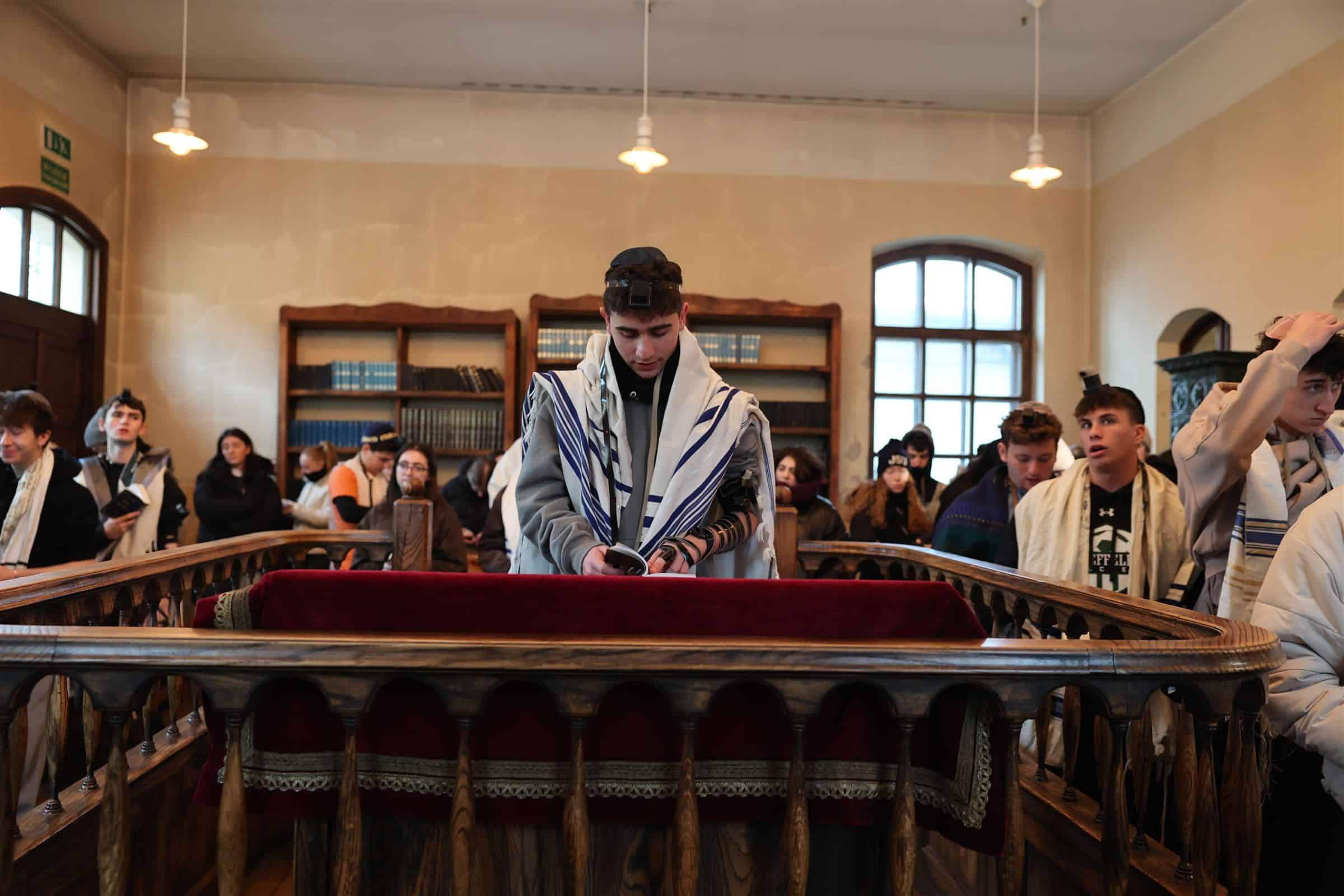
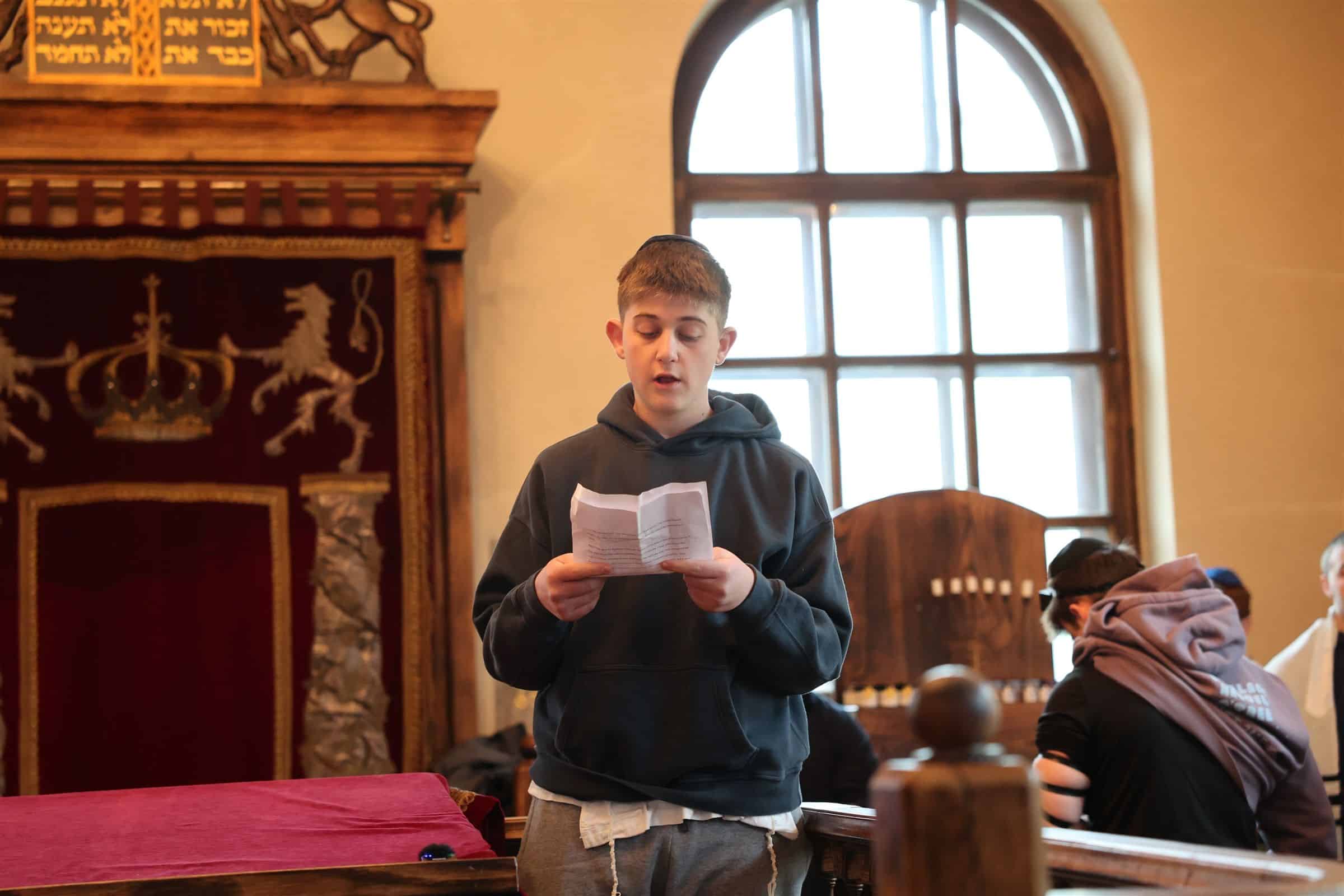
It is Sunday night, darkness has set in, and our normally noisy and boisterous bus is silent, with the snowy Polish countryside passing by through the windows. We enjoyed a beautiful, restful Shabbat in Krakow, complete with Kabbalat Shabbat together as a group in Kraków’s Tempel Synagogue, the benefit of hearing Jess Hochberg’s senior drashah, dinner at the Krakow JCC, more hours of sleep overnight than any of us had since we left the US, and a laid back schedule on Shabbat, which we all needed. Shabbat afternoon, after joyous singing at lunch and taking in the Galicia Museum’s ‘Traces of Jewish Memory’ photo exhibition, we met and had a Q and A session with Shoah survivor Bernard Offen, who just days earlier addressed the world from Auschwitz on the 81st anniversary of its liberation. It was a great Shabbat overall, and we capped it off with Havdalah in front of Kraków’s 600 year old ‘Old’ Synagogue. The only challenge with Shabbat was, it was cold. Really, really cold. And it was cold again today, and tomorrow doesn’t look much better! Thankfully, you helped your kids pack well and then have been layering up, and actually zipping up their jackets against the cold! Last night after Shabbat ended we enjoyed an hour of free time in Kraków’s Old Town Square before dinner, a preparation session for Auschwitz, and time to pack and get to sleep. This morning we woke up early to get on the road to Oswiecim, the Polish name for the city better known by its German name, Auschwitz. We started our visit not at the camp, but at the city’s one surviving synagogue, with Shacharit and Sam Schanzer’s sharing his senior drashah. Before the war, Oswiecim had a Jewish majority, a Jewish mayor, and a thriving niche industry producing kosher l’pesach vodka. All of that is gone, but one shtiebel survived, and we had the opportunity to use it for its intended purpose for the hour. From the shul we drove the short distance to Auschwitz I and spent the rest of the morning walking its grounds with local guides from the Auschwitz State Museum. In many ways, Auschwitz I serves today as a museum of the atrocities committed a short distance away at Auschwitz II – Birkenau, and so our morning served as a helpful preparation for our afternoon. After a brief lunch on our buses, we drove the three short kilometers to Birkenau where Liz and I took back guiding responsibilities, sharing with our students what had happened in the barracks, how the unloading and selections worked on the train ramp, and how the gas chambers and crematoria had functioned. It was a painful and upsetting education in the worst things human beings can do to other human beings, resulting in the destruction of 100,000 Jewish souls, alongside at least 100,000 of other backgrounds. Toward the end of our time there it was so cold that we opted to hold our Tekes earlier than planned, but together as an entire group, before offering students the option to either return to our buses, or to continue on despite the cold to briefly see the furthest reaches of the camp, before we all ultimately boarded our buses together for the drive we are on now to Tarnow. Today was powerful, but it was not easy, on multiple levels. At the same time, it was an honor to be here with your children. From the sensitive way they dialogued with Bernard yesterday, to the passionate way they sang the words of Rebbe Nachman of Breslov (that, sometimes, the whole world is a narrow bridge and the most important thing is not to be afraid), to the seriousness with which they approached learning today about how Birkenau operated – it has been Marc’s and Magan’s and my privilege to be along with them and their madrichim on this journey. Layla Tov from the Polish countryside, Rabbi Pell